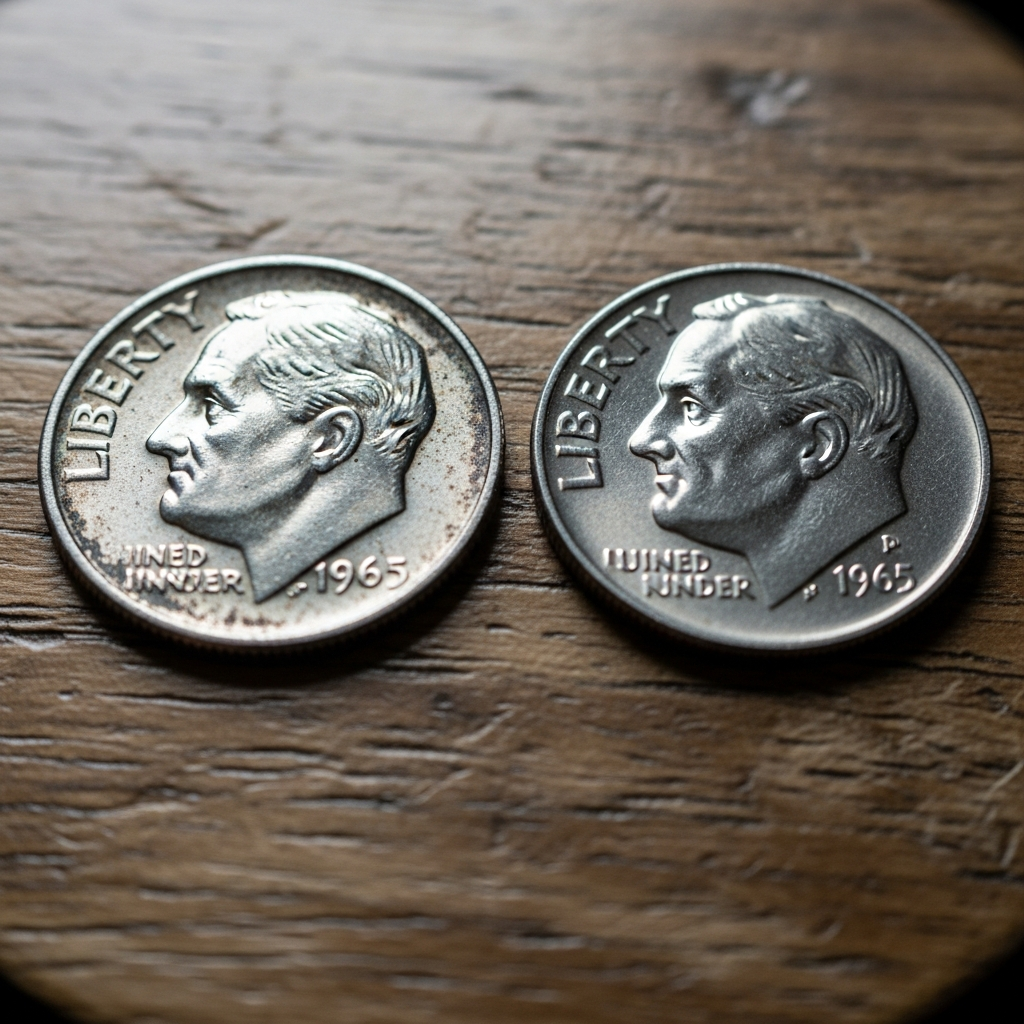
By 1964, producing a single US dime cost the Treasury more than 10 cents in silver alone. The United States was minting money at a loss. That is not a sustainable monetary policy, and it is the reason your pocket change stopped being silver after 1965.
The Silver Shortage That Forced the Change
Three forces collided in the early 1960s. Industrial demand for silver — photography, electronics, manufacturing — had grown substantially since World War II. Foreign governments and speculators were buying US silver coins at face value and melting them for the silver content, which was profitable when silver spot prices exceeded the metal value in the coins. And the growing US money supply required more coins every year, but domestic silver production could not keep pace with demand.
The Coinage Act of 1965 was not an arbitrary political decision. It was a fiscal necessity. The Treasury was spending more to produce coins than the coins were worth. Something had to change, and what changed was the metal.
LBJ Signs the Coinage Act
President Lyndon B. Johnson signed the Coinage Act of 1965 on July 23, 1965, in a televised ceremony. He acknowledged collectors’ concerns directly, promising that silver coins already in circulation would remain legal tender and that the new clad coins would function identically in commerce.
The new composition: dimes and quarters became copper-nickel clad — a pure copper core sandwiched between copper-nickel outer layers. Half dollars dropped to 40% silver through 1970, then went to copper-nickel clad. The visual change is subtle from the front, but obvious on the edge. Clad coins show a distinctive copper stripe on the edge. Pre-1965 silver coins show a uniform silver edge with no layering. This edge examination is how collectors and dealers quickly sort pre-1965 silver from post-1965 clad in a mixed lot.
The Hoarding That Happened Immediately
The announcement created exactly the response you would expect. Americans began pulling pre-1965 silver dimes and quarters from circulation as fast as they could find them. By 1967 to 1968, silver coins had largely disappeared from everyday commerce — Gresham’s Law playing out in real time. Bad money drives out good.
The math made hoarding rational. A pre-1965 Roosevelt dime contains 0.0723 troy ounces of silver. At a silver spot price of $28 per ounce, that dime’s silver content alone is worth approximately $2.02. The face value is 10 cents. Every pre-1965 dime sitting in a coin jar represents roughly 20 times its face value in metal content. This is why virtually none remain in circulation today.
Pre-1965 Roosevelt Dimes: What Collectors Value
Roosevelt dimes were minted from 1946 to 1964 in 90% silver. They are abundant in uncirculated condition because so many were hoarded as new — complete bank bags were saved from circulation during the 1960s silver rush. A roll of 50 uncirculated 1964 Roosevelt dimes is worth approximately $100 to $120 at current silver prices.
For most pre-1965 Roosevelt dimes, the value is silver content, not collector rarity. Common dates in circulated condition sell for slightly above silver melt value. The key dates that command a collector premium above silver: 1949-S, 1950-S, and 1951-S, all lower mintage San Francisco issues.
The exception: Full Split Bands designation. Uncirculated Roosevelt dimes with fully separated horizontal bands on the torch reverse — particularly 1950-S FB and 1949-S FB — can command $50 to $200 or more above silver content. The FB designation indicates a sharp strike from well-maintained dies, and collectors pursue it aggressively on the scarcer dates.
Mercury Dimes vs Roosevelt Dimes
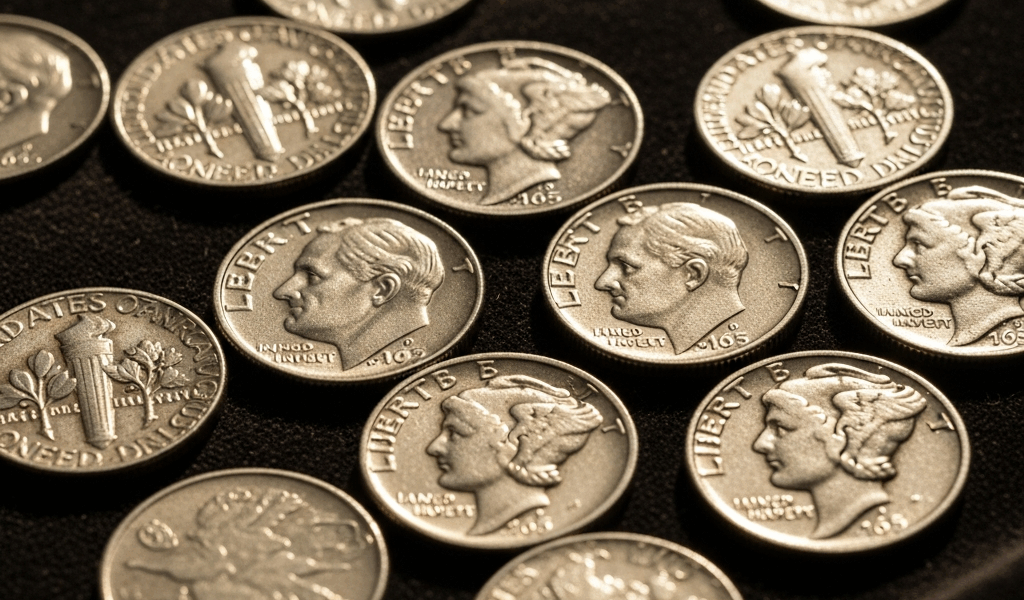
Silver dimes older than 1946 are Mercury dimes — actually Lady Liberty wearing a winged cap, not the Roman god Mercury, though the nickname stuck. Mercury dimes ran from 1916 to 1945, same 90% silver composition as the Roosevelts that followed.
Key Mercury dime dates: 1916-D is the king of the series with a maximum mintage of 264,000 struck in Denver, worth $800 to $1,500 in VF-20 condition. The 1921 and 1921-D are low-mintage issues from the Depression era that command significant premiums. Common Mercury dimes from the 1940s are worth silver content plus $1 to $3 in circulated grades.
For collectors starting with silver dimes: Roosevelt dimes from 1946 to 1964 are the more approachable entry point. Greater availability, lower per-coin cost, and a shorter series to complete. Mercury dimes offer more collector variety and key-date challenges for those who want to build a complete set over time.




Stay in the loop
Get the latest numisma news updates delivered to your inbox.