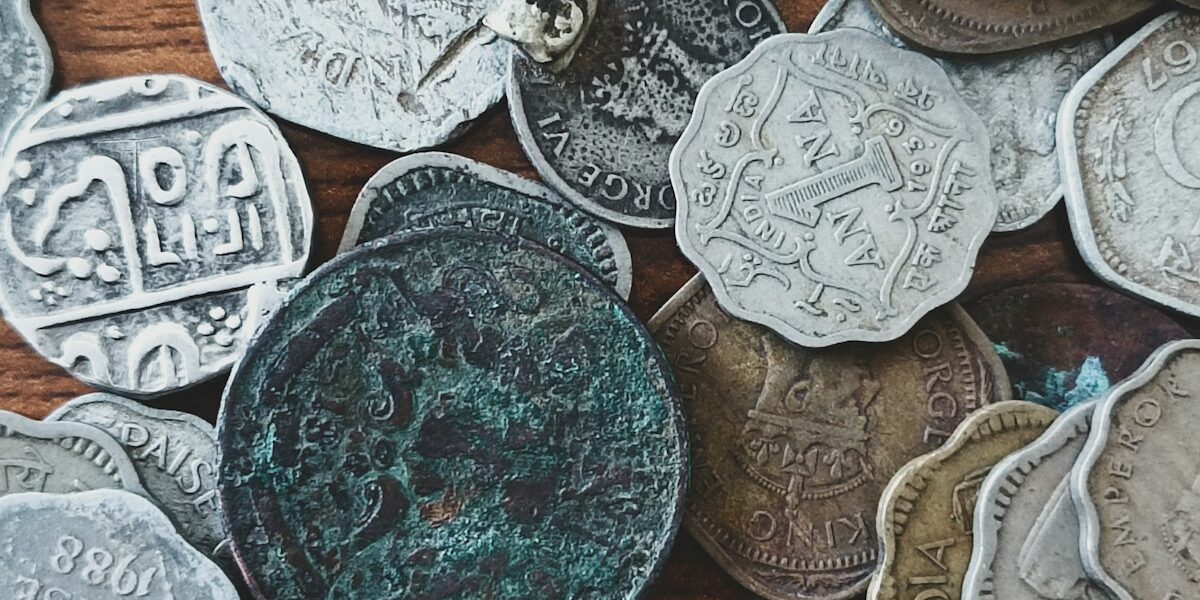
Coin conservation has gotten complicated with all the conflicting advice flying around. As someone who has saved coins from corrosion – and ruined a few learning what not to do – I learned everything there is to know about what actually works. Today, I will share it all with you.
This article includes affiliate links. We may earn a commission at no extra cost to you.
Understanding What’s Actually Happening to Your Coins
Corrosion is chemistry, not magic. Metal reacts with its environment – moisture, acids, pollutants – and changes. Sometimes that change is beautiful (old silver developing rainbow toning), sometimes it’s destructive (bronze disease eating through ancient coins).
The Different Enemies
- Oxidation – Most common, usually harmless. That natural tarnish on silver? Leave it alone. It’s actually protecting the surface.
- Verdigris – The green stuff on copper and bronze from moisture and acids. Active verdigris keeps spreading. It needs attention.
- Bronze disease – Powdery green spots that keep growing. This will destroy your coin if you ignore it.
- PVC damage – Soft plastic holders attacking your coins. Shows as green, oily residue. Preventable, fixable, but requires action.
The First Rule: Do Less
Probably should have led with this section, honestly. Most coins don’t need conservation. Most “cleaning” makes things worse.
Leave These Alone
- Stable, attractive silver toning – it adds value, not subtracts
- Smooth, even copper patina – this took decades to develop naturally
- Ancient coins with stable surfaces – you can’t improve on centuries of natural aging
- Any coin where you’re not sure what to do – uncertainty means wait
Maybe Take Action
- Active corrosion that’s visibly spreading
- PVC residue that will keep damaging the coin
- Encrustation hiding design details you need to see
- Bronze disease requiring stabilization
What I Actually Do That Works
Distilled Water Rinse
Simplest possible intervention. Removes loose surface contamination, nothing more. Use distilled only – tap water leaves mineral deposits. Pat dry with something that won’t scratch.
I use this for coins that just need dust removed. Nothing aggressive, nothing permanent.
Acetone Soak
Pure acetone dissolves organic residue, including PVC damage, without touching metal. It evaporates clean. Brief soak, air dry, done.
Critical: use only pure acetone from the hardware store. Nail polish remover contains additives that will damage your coins. I learned this the expensive way.
Mechanical Removal
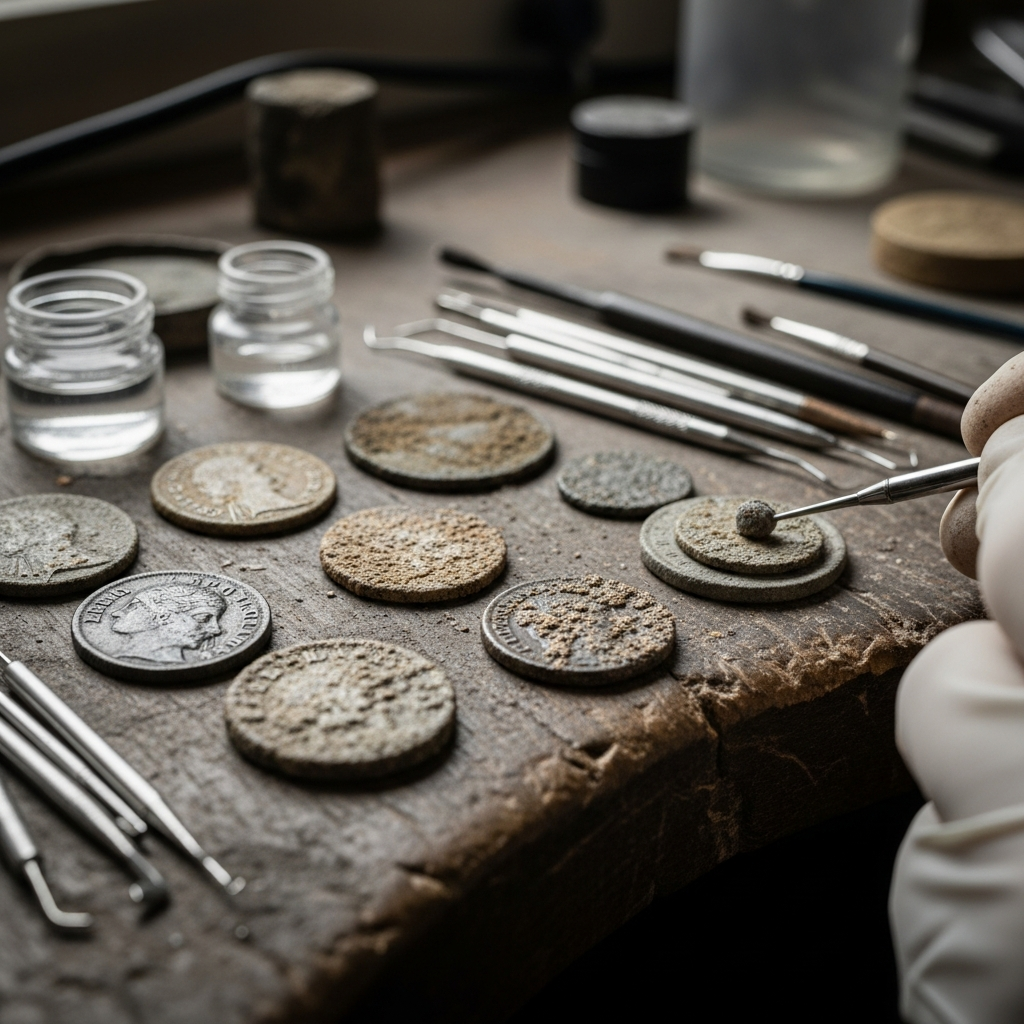
For stubborn encrustations on ancient coins, sometimes you need to physically remove material. I use wooden toothpicks and work under magnification with a quality jeweler’s loupe, incredibly slowly. Metal tools are forbidden.
This is tedious and requires patience I don’t always have. But rushing means mistakes that can’t be undone.
When to Call the Professionals
Some jobs require expertise I don’t have:
- Valuable coins where amateur mistakes cost real money
- Active bronze disease needing proper stabilization
- Complex problems beyond simple cleaning
- Anything I want to submit for grading afterward
NGC offers professional conservation. Independent conservators handle specialized work. The cost seems high until you calculate what amateur damage would cost you.
What Will Absolutely Destroy Your Coins
I’ve seen all of these cause irreversible damage:
- Baking soda – Abrasive. Removes metal. Permanent damage.
- Toothpaste – Same problem. The “polishing” is actually scratching.
- Vinegar, lemon juice, Coke – Acids strip natural patina and can etch surfaces.
- Coin dips – Strip everything, leave coins looking artificial and often worth less.
- Wire brushes – Obvious scratches visible forever.
- Ultrasonic cleaners – Can damage surfaces and drive contaminants into metal.
A cleaned coin is worth less than the same coin uncleaned. Every grading service notes cleaning on the holder. The market punishes this aggressively. That’s what makes conservation knowledge endearing to us serious collectors – knowing what NOT to do saves more value than knowing what to do.
Prevention Beats Cure
Storage That Protects
- Archival holders only – no PVC, no mystery plastics
- Stable humidity, ideally below 50%
- Away from pollutants, chemicals, anything that off-gasses
- Silica gel packets in storage containers
Handling Rules
- Edges only, always
- Cotton gloves for valuable pieces
- Work over soft surfaces
- Handle raw coins as little as possible
Regular Checks
I examine my collection quarterly, looking for developing problems. Catching active corrosion early means easier treatment. Catching it late means watching a coin die.
The Decision Framework
When facing a corroded coin, I ask myself:
- Is intervention actually necessary, or am I just bothered by something that doesn’t need fixing?
- Do I know the right method for this specific problem?
- Is this coin valuable enough to justify professional treatment?
- If I’m uncertain, shouldn’t I wait until I’m not?
Conservation done right preserves coins for future generations. Conservation done wrong destroys irreplaceable historical objects. The difference is humility about what I actually know how to do, versus what I think I can figure out.
When in doubt, do nothing. The coin survived this long without your help.



Stay in the loop
Get the latest numisma news updates delivered to your inbox.