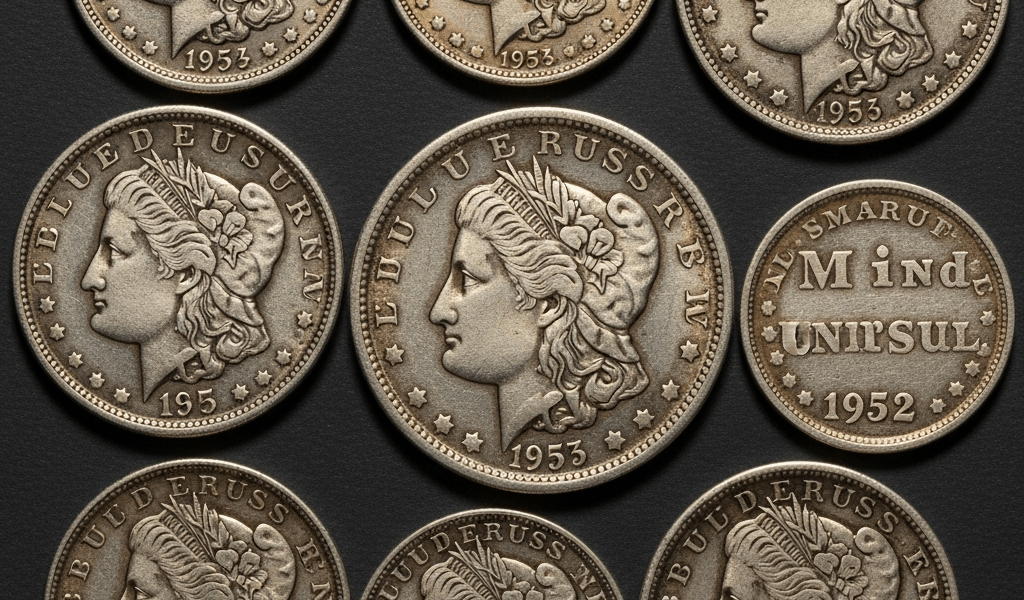
What Makes a Morgan Dollar Valuable
Morgan dollar collecting has gotten complicated with all the misinformation flying around — especially online, where everyone’s suddenly an expert. I’ve been at this for about eight years now, and the first lesson hit me somewhere around month three: two coins that look nearly identical can sell for $35 or $3,500. Same year. Wildly different price. That gap comes down to three things — mintage numbers, mint mark rarity, and condition grade.
Morgan dollars ran from 1878 to 1904, then again in 1921. The U.S. Mint struck them at Philadelphia (no mint mark), Carson City (CC), New Orleans (O), San Francisco (S), and Denver (D, starting in 1906). Some years pushed millions of coins into circulation. Others barely cracked a few hundred thousand. When demand stayed low at the time of minting and survival rates stayed low over 140-plus years, certain dates became genuinely hard to find.
Grade matters even more than rarity, honestly. Probably should have opened with this section. A circulated Morgan in Good-4 condition might fetch $25. That same date in MS-63 uncirculated? $600. Professional certification from PCGS or NGC adds another layer of market confidence — usually a 10–30% premium over raw coins — and buyers pay it willingly.
Mint marks are tiny. Literally stamped below the eagle’s tail feathers on the reverse. But they unlock entirely different price tiers. An 1889-S from San Francisco and an 1889-CC from Carson City share the same birth year. The CC version is worth five to ten times more across most grades. Same coin. Completely different story.
Morgan Dollar Key Dates and Their Values
These are the heavy hitters. Finding one in a collection you inherited or at a Saturday coin show means you’ve stumbled onto real money. Don’t let anyone lowball you before you’ve done the research.
1889-CC
Mintage: 350,000. This Carson City coin has lived rent-free on every collector’s wish list since the early 1980s. Circulated examples — VF-20 to EF-40 — run $800–$1,400. MS-63 uncirculated pieces jump to $3,500–$5,200. The CC mint mark drives the premium because Carson City stopped operations in 1893, which created a fixed population of survivors. Watch for added mint marks. Unscrupulous sellers have altered S mint marks to CC. Examine under 10x magnification and look for file marks or burnishing around the mint mark area. Don’t make my mistake — I almost bought one at a show in 2018 before a dealer friend flagged it.
1893-S
Mintage: 100,000. This San Francisco dollar is legitimately scarce — not just collector-hype scarce. Good-4 to VF-20: $400–$700. MS-63: $2,200–$3,800. The 1893-S appeared during an economic panic. Few coins entered actual circulation. Most were melted. Uncirculated survivors are genuinely uncommon and attract serious bidding at Heritage and Stack’s auctions.
1895
Mintage: 880,000. Philadelphia issue, no mint mark. But what is the 1895-P’s reputation among collectors? In essence, it’s the key date beginners miss. But it’s much more than that — it’s proof that mint marks aren’t the only path to scarcity. Good-4 to VF-20: $450–$750. MS-63: $2,500–$4,200. Most examples spent decades in Treasury vaults taking handling damage. High-grade survivors are a genuine find.
1901
Mintage: 6.9 million. Philadelphia. Here’s where I made my first real collecting mistake. I assumed high mintage meant low value. I was wrong — embarrassingly wrong. The 1901-P is the key date of the entire series at certain grade levels. Good-4 to VF-20: $30–$50. That looks ordinary. Then MS-63 jumps to $800–$1,400. MS-65 pieces hit $3,500 and above. Most 1901-P Morgans circulated hard and fast. Almost none were set aside in original condition. Don’t make my mistake — don’t skip this date just because the mintage sounds common.
1903-O
Mintage: 4.2 million. New Orleans. Good-4 to VF-20: $35–$65. MS-63: $500–$900. The 1903-O sits in attainable territory compared to true keys — you won’t need a second mortgage — but it’s still a genuine premium date. The New Orleans mint operated inconsistently, and 1903 was a lower-production year there relative to earlier O-mint output.
1921-D
Mintage: 20.8 million. Denver. The 1921-D was Denver’s only Morgan dollar year. Ever. That alone makes it notable. Good-4 to VF-20: $25–$40. MS-63: $350–$600. MS-65: $1,200–$1,900. More available than the 1889-CC, yes — but high-grade examples are still scarce. Most spent the 1920s doing actual work in circulation.
1921-P
Mintage: 44.7 million. Philadelphia. Good-4 to VF-20: $20–$30. MS-63: $250–$450. MS-65: $700–$1,100. The 1921-P was minted in enormous quantities during the post-WWI economic surge. Common in lower grades. Genuinely uncommon in high uncirculated condition — the sheer volume of production meant almost nobody bothered saving them carefully.
1884-S
Mintage: 3.2 million. San Francisco. Good-4 to VF-20: $40–$80. MS-63: $600–$1,000. The 1884-S surfaces less frequently than its mintage would suggest. Most examples were spent hard in the western economy of the 1880s. Finding a clean circulated example still takes patience.
1895-O
Mintage: 450,000. New Orleans. Good-4 to VF-20: $200–$350. MS-63: $1,200–$1,900. This one flies under the radar compared to 1889-CC, which is probably why collectors who know it love it. Serious appeal, serious premiums, less competition from beginners who haven’t found it yet.
1893-CC
Mintage: 677,000. Carson City. Good-4 to VF-20: $120–$200. MS-63: $800–$1,400. The Carson City mint closed in 1893 — making this one of the final CC dollars ever struck. Less scarce than 1889-CC, but still a genuine premium coin that any serious Morgan collector wants in the album.
1880-CC
Mintage: 591,000. Carson City. Good-4 to VF-20: $80–$150. MS-63: $700–$1,200. Early Carson City dollars carry solid premiums across the board. The 1880-CC represents the series beginning to hit its stride at the CC facility — collectors building complete CC sets need this one.
Semi-Key Morgan Dollars Worth Knowing
These coins live in the middle ground — between common filler dates and ultra-rare keys. You’ll actually encounter them at shows, in inherited collections, and on eBay. They pay real money in the right grades.
1892-CC: Mintage 1.3 million. VF-20 range: $100–$160. MS-63 range: $650–$1,100. A solid mid-tier Carson City dollar that surfaces more often than 1889-CC but still commands a genuine premium over Philadelphia or San Francisco issues from the same year.
1884-O: Mintage 9.7 million. VF-20 range: $25–$45. MS-63 range: $300–$550. Common in circulated grades. Sharp premium jump starting at MS-60. This makes it a useful teaching coin — grade it at home, compare to PCGS population data, learn what grade boundaries actually mean in dollars.
1890-CC: Mintage 2.3 million. VF-20 range: $95–$155. MS-63 range: $600–$1,000. Another CC year with a strong collector following. The 1890-CC bridges the gap between the premium 1889-CC and the more common later Carson City dates — apparently I’m the kind of collector who finds that interesting, and it works for me.
1883-O: Mintage 8.7 million. VF-20 range: $30–$50. MS-63 range: $350–$650. Early New Orleans dollars attract collectors building mint mark type sets. Uncirculated examples jump noticeably in value, which surprises beginners expecting a flat price curve across grades.
1891-S: Mintage 8.2 million. VF-20 range: $30–$55. MS-63 range: $450–$750. San Francisco dollars from the 1890s are semi-scarce. That’s what makes the 1891-S endearing to collectors hunting keys without ultra-deep pockets — real premium, real availability, real reward when you find a sharp example.
1882-S: Mintage 12.9 million. VF-20 range: $25–$40. MS-63 range: $350–$600. Early San Francisco dollars carry modest but real premiums. The 1882-S appears often enough that tracking one down doesn’t require months of hunting — but MS-63 examples still involve serious money when you get to the register.
How to Grade Your Morgan Dollar at Home
Professional grading runs $15–$50 per coin at PCGS or NGC, depending on the service tier. Before sending anything in, learn to read the coin yourself. Grading Morgans is genuinely learnable — you just need to know where the wear shows up first.
Good-4: Heavy circulation. Legends are flat. The eagle’s feathers have worn smooth. Liberty’s cheek shows minimal detail. Date and mint mark are still readable — barely. This is the floor.
Fine-12: Major design features worn but visible. Liberty’s cheek retains a little modeling. Eagle’s breast feathers are outlined but undefined. Typical dumpster-dive territory, honestly.
VF-20 (Very Fine): About 40% of original detail survives. Liberty’s cheek shows moderate relief. Eagle’s breast feathers have defined outlines. Hair above Liberty’s ear shows distinct strands. Most circulated Morgans grade VF or below — this is the median.
EF-40 (Extremely Fine): About 80% of detail intact. Hair lines sharp. Cheek shows full roundness. Feathers individually separated on both obverse and reverse. This is where premiums start climbing in ways that matter to buyers.
MS-60 and above (Uncirculated): No wear anywhere on the high points. Cheek fully rounded. All hair strands separated. Complete feather detail throughout. At MS-63, toning is light and eye appeal is strong. At MS-65, the coin looks nearly untouched — because it basically was.
Check the cheek first. It’s the easiest wear point to spot with a loupe. Then examine the hair above the ear. Flip the coin and study the eagle’s breast feathers. Those three areas tell you everything — you don’t need to inspect the whole surface to establish a grade range.
For serious grading help, explore our guide comparing PCGS vs NGC certification to understand how professional graders approach Morgan dollars specifically.
Where to Check Current Morgan Dollar Prices
The values in this article reflect general market averages from the past six months. Real prices move — sometimes weekly — based on economic conditions, collector demand, and the specific eye appeal of individual coins.
PCGS CoinFacts and the NGC Price Guide are the two sources worth bookmarking. Both pool actual auction results and dealer sales, updated monthly. Raw coins — non-certified — typically sell for 20–40% less than professionally graded examples of the same date and grade. That gap is real and consistent.
Search completed eBay sales for real-time data. Filter by “sold listings” only — asking prices are noise. Expect variation. A single MS-63 1889-CC might hammer at $3,700 one week and $4,100 the next, depending on toning and eye appeal in the specific photos. Both results are valid.
For selling your own collection, check out our deeper guide on where to sell coins online to figure out which platforms fit your inventory size and timeline.
Morgan dollars remain one of the most liquid collectible coins in America. Demand is steady. Pricing data is accessible — a few minutes on PCGS or NGC gets you current numbers. That combination of history, scarcity, and market depth is exactly what makes them worth collecting seriously. So, without further ado, start with the key dates — and check the cheek first.



Stay in the loop
Get the latest numisma news updates delivered to your inbox.