What Makes the 1955 Double Die So Famous
The 1955 double die penny has gotten complicated with all the misinformation flying around. As someone who spent years digging through coin rolls, flea markets, and auction catalogs, I learned everything there is to know about this specific error. Today, I will share it all with you.
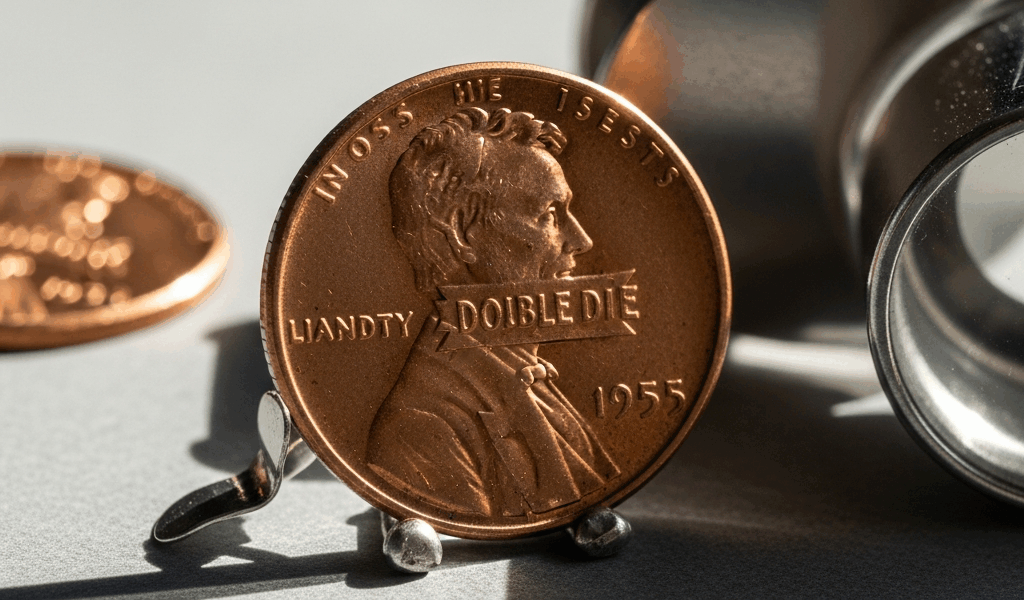
But what is the 1955 DDO? In essence, it’s a penny where the working die shifted mid-hubbing — causing a ghostly second impression to land on the date, LIBERTY, and IN GOD WE TRUST. But it’s much more than that. It’s the single most recognizable mint error in American coinage history.
Here’s what actually happened at the Philadelphia Mint. During the hubbing process — where a hardened steel punch presses the design into a working die — the die rotated slightly between strikes. The second impression landed offset to the upper left. Frustrated by a tight production schedule and working overnight shifts, the pressmen ran the die anyway, striking somewhere between 20,000 and 24,000 coins before anyone caught it.
Twenty thousand sounds like a lot. The Mint struck over 500 million pennies that year. Do the math. And in 1955, people just spent them — bought cigarettes, dropped them in pay phones, lost them in couch cushions. That was 1955. Nobody knew yet.
This coin became the gateway error. It gets searched more on Google than any other doubled die variety. If you’ve ever stared at a penny wondering whether it was worth real money, there’s a decent chance you were hoping it was this one. That’s what makes the 1955 DDO endearing to us collectors. So, without further ado, let’s dive in.
How to Identify a Real 1955 DDO
Probably should have opened with this section, honestly. Everyone asks “what’s it worth?” before learning what to actually look for. You cannot sell what you cannot identify.
On a genuine 1955 double die obverse, the doubling hits three places hard. First — the date. The 1955 shows clean separation between the primary and secondary digits. Not blurry. Not faint. The numbers look thicker, almost like someone stamped the date twice and nudged the second pass slightly up and to the left.
Second, LIBERTY. Every letter — L, I, B, E, R, T, Y — carries that ghost image. Hold the coin at eye level under a decent lamp. You will see a fine but unmistakable shadow of each letter sitting slightly higher and to the left of the main strike. It doesn’t require imagination. It jumps at you.
Third, IN GOD WE TRUST doubles along the rim. Same upper-left offset. Same sharp secondary ridge.
Now, here’s what matters: genuine doubling is raised and distinct. Pick up a 5x loupe — I use the Carson Optical MagniFlip, about $12 on Amazon — and you will see a clear secondary ridge sitting physically higher on the coin’s surface. The image isn’t mushy or smeared. It’s sharp. That distinction will save you from a lot of bad purchases.
Naked-eye visibility is real on this one. People assume error coins need magnification. Not the 1955 DDO. Under ordinary indoor lighting, the doubling on a decent example is immediately obvious. That separates it from lesser doubled dies where you’re squinting and second-guessing yourself for twenty minutes.
The die also wore down over its production run. Early strikes — Die Stage 1 — show deeply raised, crisp doubling. Later strikes, Stage 2 and beyond, carry the same doubling but with softer edges as the die fatigued. Both are genuine. Both command real premiums. Stage 1 coins simply cost more because they hit harder and look more dramatic.
Machine Doubling vs True Doubled Die — Know the Difference
This is where most new collectors get burned. I’m apparently the type who learns things the expensive way, and a $8 flea market “find” back in 2009 taught me this lesson personally. I was convinced I had a 1955 DDO. I did not. I had common machine doubling.
Machine doubling — sometimes called shelf doubling or ejection doubling — happens when the coin shifts slightly as the die strikes it. Sounds similar. Looks completely different once you know what you’re seeing.
With machine doubling, the second image is flat and shelf-like. Imagine sliding a coin sideways under a stamp mid-press. The secondary impression sits flush against the first, creating a flat ledge — no raised ridge, no sharp definition. It often looks worn or rubbed even on coins that never circulated. Don’t make my mistake.
Here’s the practical difference:
- True 1955 DDO: Raised, distinct secondary image. Separate visible ridge under magnification. Sharp and clean on even heavily circulated examples.
- Machine doubling: Flat, shelf-like appearance. Secondary image merges into the primary strike. Looks dragged or smeared sideways — never sharp.
The 1955 DDO doubling is unmistakable once you’ve held a real one. Many collectors recommend visiting a local coin shop — somewhere like David Lawrence Rare Coins or a reputable local dealer — and asking to examine a certified slab for thirty seconds. That thirty seconds of reference is worth more than an hour of YouTube videos.
Fakes exist, too. Some sellers file dates on common pennies or chemically alter surfaces. Others photograph genuine doubled dies and paste those images alongside raw coins in listings. Buying from reputable dealers and requesting PCGS or NGC certification eliminates most of this risk. Honestly, just budget for the slab.
1955 Double Die Penny Value by Grade
Values shift with the market, but here’s what current auction data and PCGS/NGC price guides reflect. These figures represent mid-2024 estimates alongside real recent sales.
| Grade | Typical Value Range |
|---|---|
| Good (G-4) | $175 – $250 |
| Very Good (VG-8) | $250 – $375 |
| Fine (F-12) | $350 – $500 |
| Very Fine (VF-20) | $500 – $750 |
| Extremely Fine (EF-40) | $750 – $1,200 |
| Mint State 60 (MS-60) | $1,500 – $2,200 |
| Mint State 63 (MS-63) | $2,500 – $4,000 |
| Mint State 64 (MS-64) | $4,500 – $7,500 |
| Mint State 65+ (MS-65, Red) | $8,000 – $15,000+ |
Color designation matters enormously once you get into mint state territory. An MS-64 Red — meaning original copper luster, never circulated — sold for $6,800 at Heritage Auctions recently. The same coin graded MS-64 Red-Brown? $4,200. Brown? $2,900. I’m apparently more sensitive to color differences than most people and Heritage’s photos work for me while blurry eBay listings never do — but even in mediocre photos, the difference between Red and Brown is visible.
Circulated grades offer real value for collectors on tighter budgets. A VF-20 gives you a coin where the doubling remains completely visible and unmistakable — at roughly one-tenth the cost of an MS-64. Many serious collectors prefer this tier. Full experience of the error, much lighter hit to the wallet.
Raw uncertified coins typically sell for 30–50% less than slabbed equivalents. Buyer skepticism is high right now, and for good reason — altered dates and outright counterfeits flood the market constantly.
Should You Get It Graded Before Selling
Short answer: yes, if the coin grades VF or better.
Third-party certification through PCGS or NGC runs $50–$100 depending on the service tier you choose. That grading fee feels painful right up until it adds $300–$2,000 to your final sale price. The math works out. It always works out at this grade level.
For coins in Good through Fine condition, certification still makes sense on private sales. Selling to a local coin shop is a different conversation — dealers may offer a fair price on raw coins and absorb the grading cost themselves. Call three shops before deciding. Prices vary more than you’d expect.
While you won’t need to become a professional numismatist, you will need a handful of resources — at least a decent loupe, a PCGS price guide subscription, and some patience. First, you should submit through the PCGS or NGC online portal — at least if you want real market value on anything above Fine condition. The certified holder might be the best option, as the 1955 DDO market requires verified authenticity. That is because counterfeits and altered coins have made raw buyers genuinely gun-shy.
What actually happened when I sold my own 1955 DDO raw: it sat on eBay for three weeks. Low-ball offers, skeptical messages, one guy asking if I could “prove it wasn’t filed.” Submitted it to PCGS, got it back as VF-25, relisted. Sold in four days at full asking price. The slab did all the talking.
Never grade your own coins for selling purposes. “This looks like an MS-63 to me” is not a valuation anyone will pay for. Get the official number. It protects you, it protects the buyer, and it unlocks what the coin is actually worth. This new idea — third-party certification — took off several years after the coin hobby expanded in the 1980s and eventually evolved into the standard that collectors know and trust today.
The 1955 double die penny rewards careful, patient collectors. Verify under magnification, understand what you’re looking at, and trust the process. The diligence pays off.


Stay in the loop
Get the latest numisma news updates delivered to your inbox.