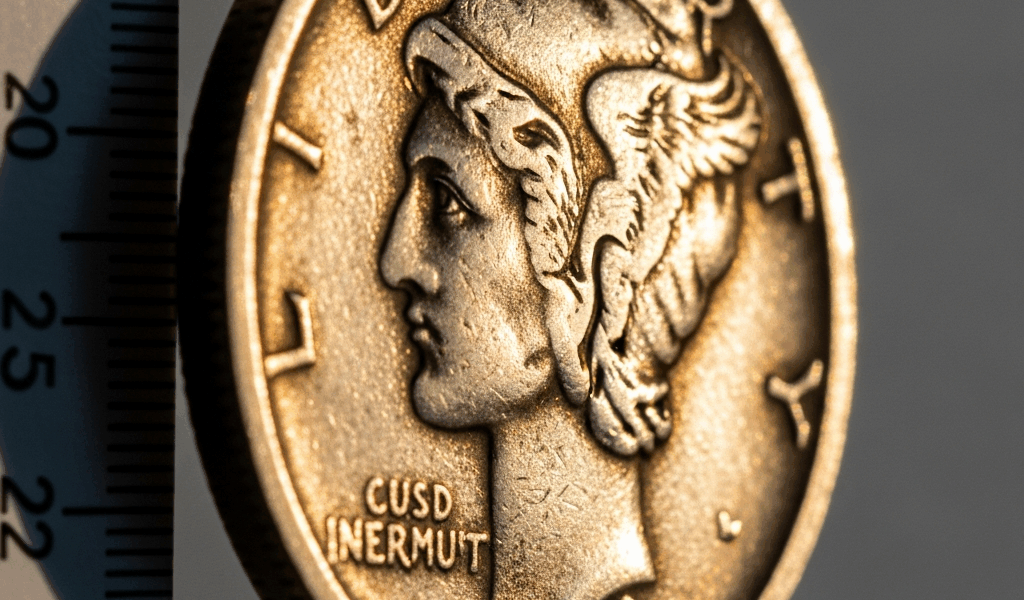
Why the 1916-D Is the Key Date Everyone Wants
Mercury Dime collecting has gotten complicated with all the misinformation and overpriced junk flying around. So let me cut straight to the brutal number that defines this whole conversation: 264,000. That’s how many 1916-D dimes left the Denver Mint. Compare that to the 22.2 million struck in Philadelphia that same year. The gap is almost insulting.
As someone who stumbled into Mercury Dimes about eight years ago thinking I’d casually knock out a date set, I learned everything there is to know about just how fast that plan falls apart. Two weeks in, I realized what a 1916-D actually costs. Scarcity plus age plus collector obsession created something genuinely unusual in numismatics — a coin that’s simultaneously legitimate treasure and a counterfeiter’s dream. Dealers move genuine examples almost as fast as they acquire them. Today, I will share it all with you, including the stuff I wish someone had told me before I started shopping.
You’re going to see this coin priced anywhere from $800 in worn condition to $30,000-plus in uncirculated grades. Every serious Mercury collector needs one. Every counterfeiter knows it. That’s what makes the 1916-D so endearing to us collectors — and so dangerous to buy without knowing what you’re doing.
1916-D Mercury Dime Value by Grade
So, without further ado, let’s dive in — starting with actual money. Here’s what the market pays, pulled from recent Heritage Auctions results and PCGS/NGC price guides over the last eighteen months or so:
| Grade | Typical Market Value |
|---|---|
| Good-4 | $800–$1,200 |
| Very Good-8 | $1,200–$1,800 |
| Fine-12 | $1,600–$2,400 |
| Very Fine-20 | $2,200–$3,500 |
| Very Fine-35 | $3,500–$5,500 |
| Extremely Fine-40 | $5,000–$8,000 |
| Extremely Fine-45 | $7,500–$11,000 |
| About Uncirculated-50 | $9,000–$14,000 |
| MS-60 | $12,000–$18,000 |
| MS-63 | $18,000–$25,000 |
| MS-65 | $28,000–$35,000+ |
Look at that staircase. A G-4 and an MS-65 aren’t two versions of the same coin — they’re entirely different investment tiers. Even a heavily worn example still pushes close to four figures. That’s not normal for dimes from any era. Not even close.
Grade is everything here. Jumping from VF-35 to EF-40 can mean $2,500 more cash out of pocket. The gap between MS-63 and MS-65? Sometimes $10,000. That’s why professional certification isn’t a nice-to-have. When you’re spending five or six figures, a third-party opinion from PCGS or NGC is simply non-negotiable.
How to Spot a Fake 1916-D Mercury Dime
Probably should have opened with this section, honestly. The counterfeit problem is genuinely widespread — worse than most newer collectors expect.
I’ve examined maybe 200-plus Mercury Dimes over the years, and the fakes consistently fall into two camps. First: altered 1916-P coins where someone added a D mintmark using acid, a dremel-style tool, or occasionally solder. Second: genuine Denver Mint coins from later years — think 1922-D or 1923-D — with the original date ground off and “1916” re-engraved. Both approaches are clever. Both are detectable once you know what to hunt for.
The altered 1916-P is the most common scam. A 1916-P sitting in an estate sale is worth maybe $50–$80. A bad actor acquires it, adds or re-tools a D mintmark, and suddenly tries to move it as a $1,000-plus coin. The profit math is obvious. Don’t make my mistake of underestimating how polished some of these fakes look at first glance.
What counterfeiters consistently miss:
- Mintmark placement is exact and consistent across genuine 1916-D examples
- The font, depth, and strike pressure of a genuine mintmark carry specific, repeatable characteristics
- Tool marks from alteration leave microscopic scarring visible under magnification
- Die diagnostics — tiny unique features on the coin face — match only genuine 1916-D dies
- Metal composition and planchet thickness can be physically tested
The altered-date category is trickier, since you’re starting with a real Mercury Dime. But genuine 1916-D coins carry distinct die characteristics that later rare-date coins from 1922 or beyond simply don’t share. A skilled grader spots these differences even on worn examples. PCGS and NGC employ specialists who train for years specifically for situations like this.
What the Mintmark Should Look Like on a Genuine Example
But what is the correct mintmark position? In essence, it’s below and slightly left of the E in ONE DIME on the reverse. But it’s much more than that — position alone won’t save you. You need to understand what a genuine strike actually looks like up close.
On a 1916-P, there’s no mintmark at all. When someone adds one after the fact, they almost always place it slightly off — too centered, too far left, or sitting higher than it should. Genuine mintmarks stamped into the die during manufacture sit at a precise, repeatable depth and angle. Every time. No variation.
Here’s what to actually look for:
- Visual appearance: The D should look slightly raised from the surface — not carved or gouged into it. It should display the same luster and patina as the surrounding metal. If it looks shiny and new while the rest of the coin is toned, that’s a red flag worth walking away from immediately.
- Font consistency: The D should match the serif style and proportions of period Denver Mint coinage. It’s a specific font from 1916. Counterfeit versions sometimes look slightly too modern or too rough around the edges.
- Depth and strike: A genuine mintmark was stamped once, hard, into the die. No hesitation marks. No double impressions. Altered coins sometimes show shallow, incomplete strikes or faint ghost impressions underneath.
- Surrounding metal integrity: The metal around the D should be smooth and natural. Tool marks, scratches radiating outward, or unusual pitting? Someone worked on this coin after it left the mint.
I’m apparently a magnification obsessive, and a 20x USB microscope — mine was $32 on Amazon, a generic no-name model — works for me while a basic 5x loupe never quite did the job. A 5x to 10x loupe is the minimum you should use, honestly. Under real magnification, a genuine mintmark shows symmetrical, clean edges. An altered one displays rough edges, drag marks, or incomplete impression. The difference is obvious once you’ve seen both side by side.
Photos alone aren’t enough. You need direct inspection or the certification of PCGS or NGC. Their graders use stereoscopes and years of comparative experience you simply can’t replicate staring at eBay listings.
Should You Buy Raw or Slabbed
Never buy a raw 1916-D unless you’re an experienced numismatist — or you’ve had it examined in person by someone who is. Full stop.
A slabbed coin housed in a PCGS or NGC holder with a grade printed on the label gives you two things. First, authentication. PCGS and NGC reject counterfeits and altered coins, and their rejection rate on suspicious 1916-D submissions runs high. Second, grade certification. That MS-63 label means multiple trained eyes agreed on the condition. When a coin costs $15,000, that agreement matters enormously.
Raw coins might save you 5–10% upfront. You lose the authentication guarantee and the liquidity. When you eventually try to resell, buyers will demand it be slabbed anyway — so you’ll end up paying grading fees plus sitting on the coin longer while it’s at the service. The math doesn’t work in your favor.
CAC stickers — Certified Acceptance Company — on slabbed 1916-D examples command real premiums. Sometimes 10–15% above unverified slabs. CAC graders cross-examine PCGS and NGC holders and place a green sticker only on coins meeting strict market standards. It’s an extra layer of confidence worth understanding. We’ve published a full guide on CAC here on the site if you want to dig into the program deeper.
Where to find legitimate slabbed examples? Heritage Auctions runs a dedicated rare coin section with detailed results going back years. Stack’s Bowers maintains one of the largest inventories of graded Mercury Dimes you’ll find anywhere. Established rare coin shops and NGC-partnered dealers carry 1916-D inventory regularly. Avoid random online listings from unverified sellers. Spend the time. Find the right source. This new idea of “just buying online and figuring it out later” took off several years ago and has eventually evolved into the cautionary tale serious collectors know and repeat today.


Stay in the loop
Get the latest numisma news updates delivered to your inbox.